When you first start thinking about preparedness, everything feels equally urgent — water, radios, generators, first aid, food, that one gadget someone swore by. And when everything is a priority, nothing is. So here’s a calmer way to look at it: a pyramid, where each layer rests on the one beneath it.
Read it from the bottom up. The base is the cheapest and the most important; the top is the most specialized. You build upward — and if a lower layer is thin, that’s exactly where your next hour and next dollar should go, no matter how tempting the shiny stuff near the top looks.
1. Planning — the foundation
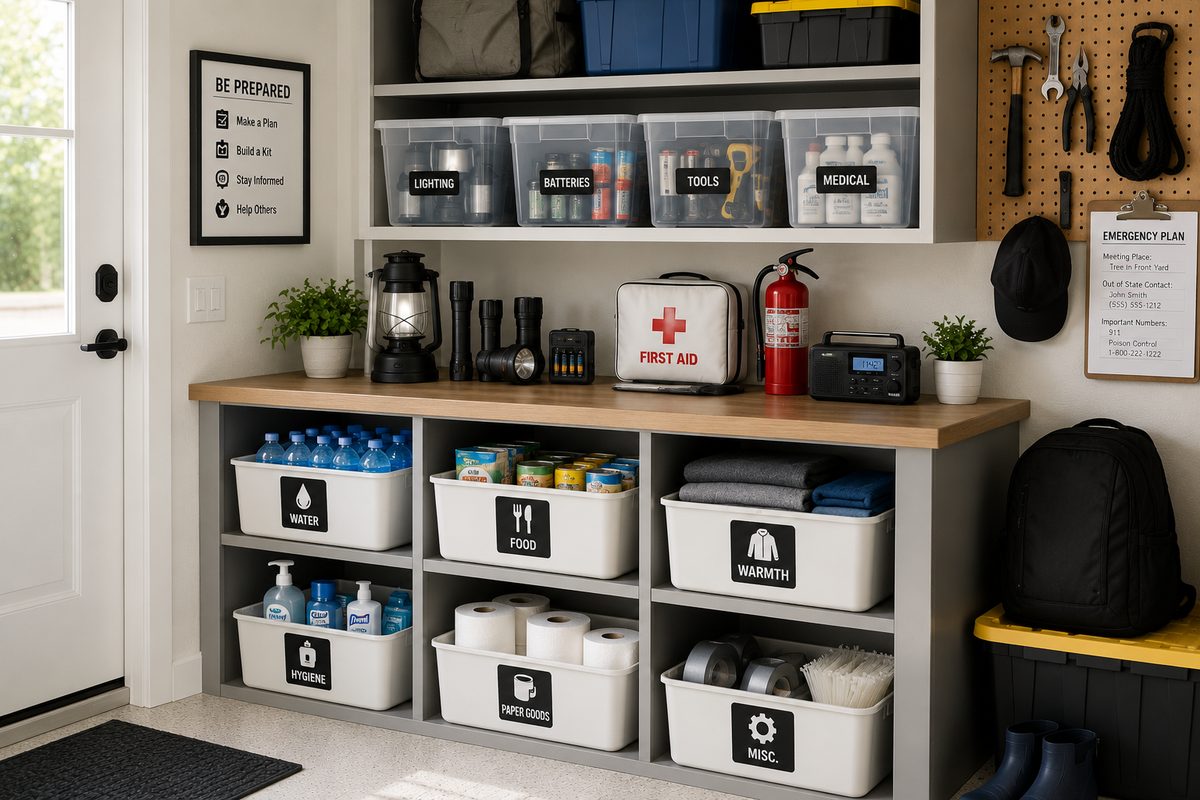
A plan costs nothing and makes every other layer work harder. Who you’ll call when phones are spotty, where you’ll meet, who’s picking up the kids, what you’ll do if you’re not together. Write it on one page. This is the layer most people skip — and the one that pays off first. Start with a family communication plan.
2. Water
You can go weeks without food but only days without water, and it’s the first thing to vanish from shelves in a regional emergency. It’s also the cheapest peace of mind you can buy. Aim for one gallon per person per day — three days minimum, two weeks as a goal. Here’s how much, and how to store it.
3. Food
Not freeze-dried buckets for the end of the world — just a couple of weeks of the normal food your family already eats, bought a little deeper and rotated through. If the stores are closed or the roads are bad for a few days, you barely notice.
4. Medical
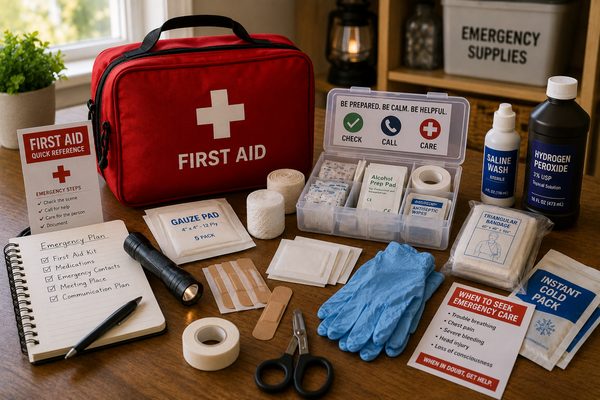
A first aid kit you actually know how to use, a buffer of any prescriptions you depend on, and the skills to handle the small stuff and stabilize the big stuff. If you do just one thing on this layer, learn CPR — it may be the highest-leverage skill on the whole pyramid.
5. Power
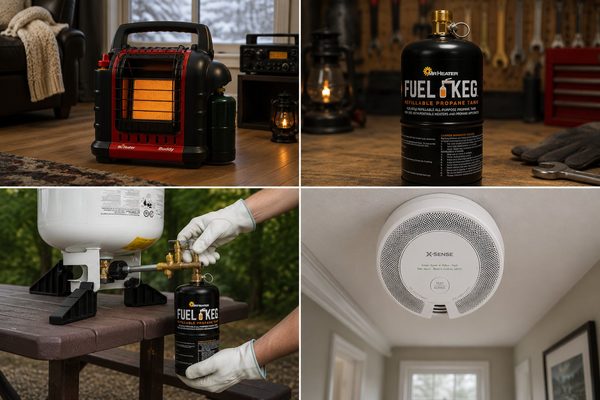
Once the basics are covered, keeping the lights, phones, and refrigerator running turns a stressful outage into a minor inconvenience. For most families a portable power station is the right first step; add solar or a generator only if your situation calls for it.
6. Communications
At the top sits the layer that matters when the normal channels go down: a NOAA weather radio for alerts, two-way radios for the family, and — when you’re ready — ham radio for the deepest resilience. It sits last not because it’s unimportant, but because a radio is hard to use well when the four layers under it are shaky.
Where to start
You don’t build a pyramid from the top. If you’ve been collecting gadgets while your plan lives only in your head and your water is a single case in the garage, you’re building upside down. Shore up the base first; each layer makes the next one easier. And if you’ve read our Start Here guide, you’ve already met this pyramid — those steps are simply these layers, in order.