Here’s what happened to me — and what I learned.
If you had told me twenty years ago that I’d someday be writing about preparedness, I probably would have laughed.
For most of my life, preparedness wasn’t really a category in my mind. I wasn’t collecting gear, building bug-out bags, or worrying about worst-case scenarios. I was busy doing the same things most people are doing—building a career, raising a family, paying bills, fixing things around the house, and trying to keep all the moving pieces of life pointed in roughly the same direction.
I’ve always been a planner by nature, though. I like systems. I like solving problems. I’ve spent much of my professional life working with technology, and one thing technology teaches you is that things fail. Hard drives fail. Networks fail. Servers fail. The question isn’t whether something will eventually go wrong. The question is whether you’ve thought about it before it does.
For years, I treated most of life that same way. Keep a flashlight around. Have a backup plan. Carry a spare battery. Nothing extreme. Just practical.
Then life got personal.
Several years ago, my wife suffered a sudden cardiac arrest.
There are moments in life that divide everything into a before and an after. For me, that was one of them.
The details of that day aren’t really the point. What stayed with me afterward wasn’t fear. It was the realization of how quickly an ordinary day can stop being ordinary. One minute you’re thinking about dinner plans, work projects, or what needs to be done around the house this weekend. The next minute you’re facing decisions that matter in ways you never imagined.
Looking back, I don’t think that experience turned me into a preparedness enthusiast. What it did was make me pay closer attention. It made me realize how much of resilience comes from things we do long before we need them.
The CPR class you almost didn’t take. The flashlight in the drawer. The emergency contact list. The weather radio. The extra medication. The conversation you had with your family about what to do if plans suddenly change.
None of those things seem particularly important until they are.
As I began reading and learning more, I found myself drawn to preparedness, but not necessarily in the way the word is often portrayed. A lot of preparedness content seemed focused on dramatic scenarios and catastrophic events. There is certainly a place for some of that, but I kept finding myself interested in a much simpler question:
How can ordinary families become a little more resilient?
Not perfectly prepared. Not ready for every imaginable disaster. Just more resilient than they were yesterday.
How do you get through a power outage with less stress? How do you stay informed during severe weather? How do you communicate when normal systems aren’t working? How do you help a neighbor in a crisis? How do you create enough margin in your life that unexpected problems remain inconveniences instead of emergencies?
Those questions felt much more relevant to the life I was actually living.
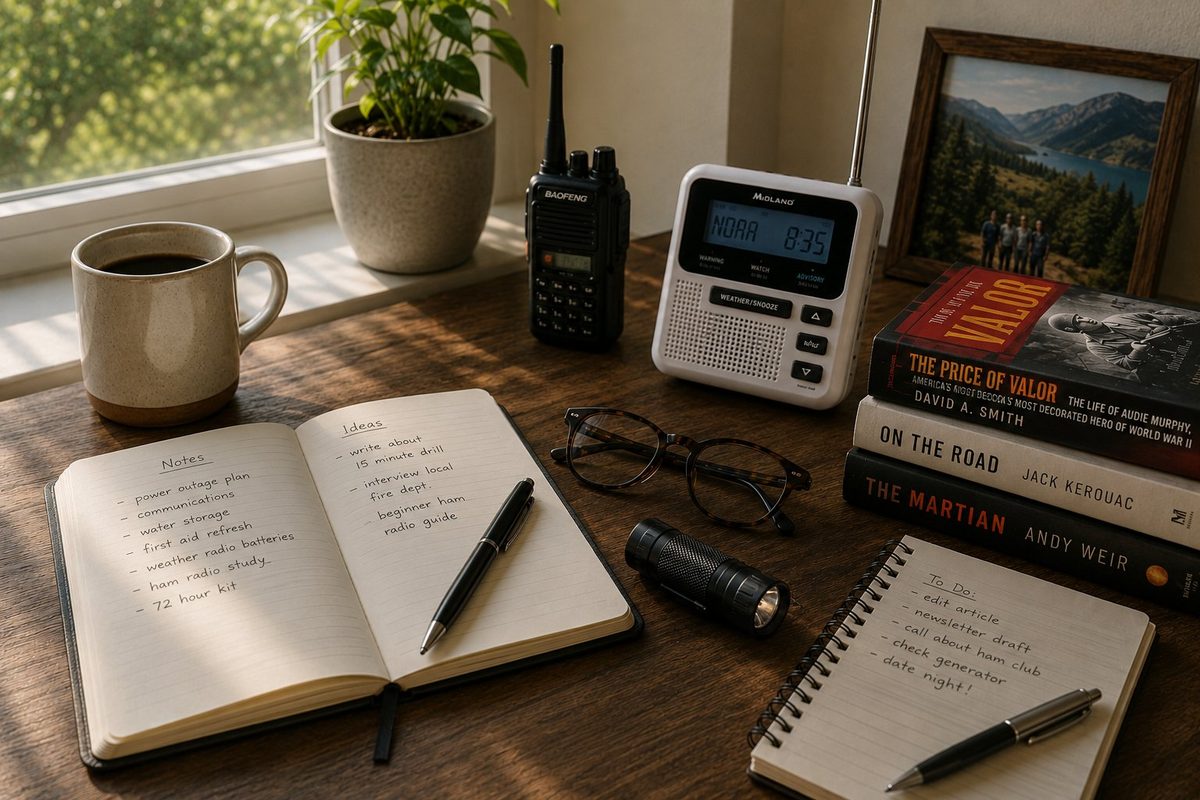
Over time, preparedness became less about gear and more about mindset. The gear is useful, and I enjoy testing equipment as much as anyone. But the older I get, the more convinced I become that preparedness is really about reducing uncertainty. It’s about giving yourself options. It’s about replacing panic with a plan.
That’s why I created Quiet Readiness.
I didn’t become interested in preparedness because I was worried about the end of the world. I became interested in preparedness because life taught me how quickly an ordinary day can become an extraordinary one.
This site is simply my attempt to share what I’ve learned along the way. Some of it comes from personal experience. Some comes from research. Some comes from mistakes I hope not to repeat. All of it comes from a desire to help other families become a little more capable, a little more confident, and a little more resilient.
If that sounds like something you’re interested in, welcome. I’m glad you’re here.
— M. T. Parsons, Quiet Readiness
Honest recommendations, no fear-mongering, and real respect for your trust — that’s the deal. Read Our Promise →
Questions, suggestions, or a topic you’d like covered? Send me a message any time — and the best way to stay in touch is the newsletter.
No fear-mongering, no clutter — just useful things worth your time.