When the power goes out in a cold snap, the goal isn’t to heat the whole house. It’s to keep one room — where your family actually sits and sleeps — warm enough to be safe and comfortable until the lights come back. A small propane heater does that well, cheaply, and without a generator running outside.
The catch is that propane heat and carbon monoxide are the same conversation. Done right, it’s a calm, practical part of a winter plan. Done carelessly, it’s dangerous. So let’s do it right.
Heat that runs on small propane canisters
The simplest setup is a radiant heater that runs off 1 lb propane canisters — the same little bottles you’d use for a camp stove. They’re widely available, store easily, and a single canister runs a small heater for hours.
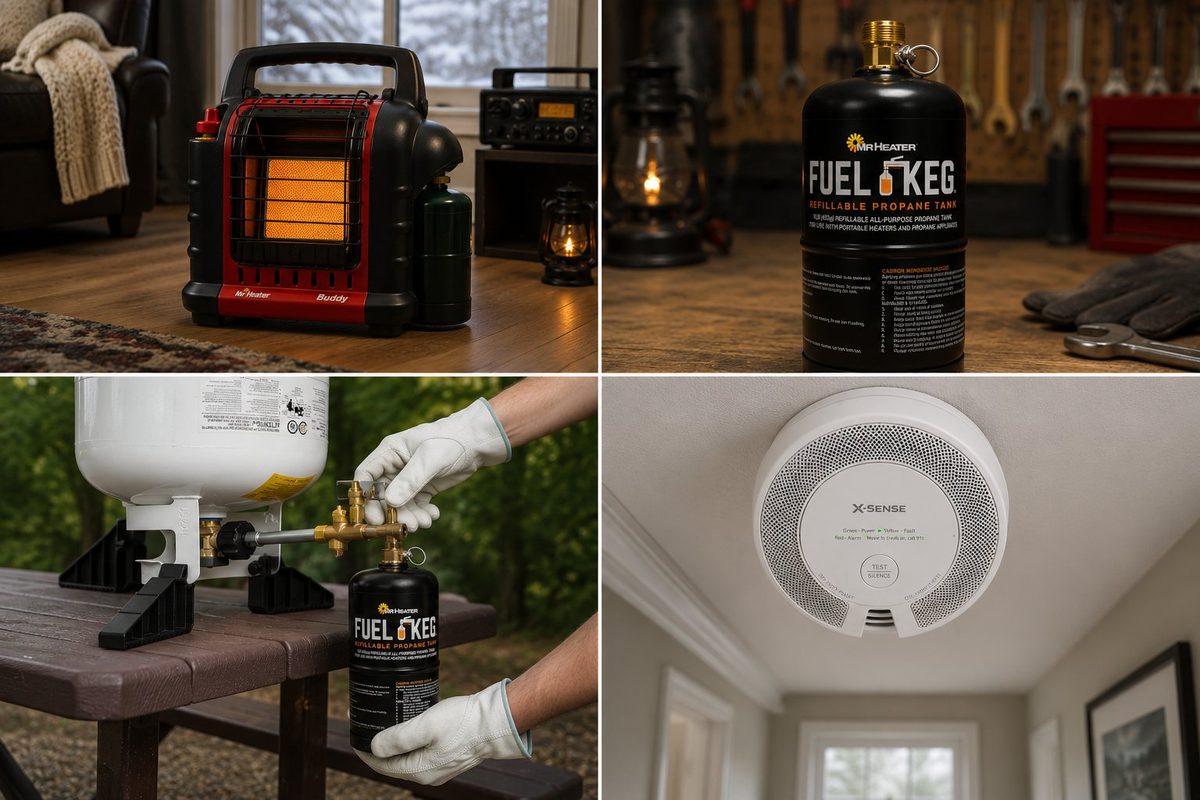
The problem with the disposable green bottles is that they pile up, cost more over time, and you always seem to run out at the worst moment. The fix is a refillable canister system: a DOT-certified 1 lb cylinder you top off yourself from a standard 20 lb propane tank in about a minute. You buy the cylinder once and the refill kit once, and from then on you’re refilling instead of rebuying.
A few honest notes: the refillable cylinder ships empty, so you need the matching refill kit to use it. Always refill outdoors, away from any flame or ignition source, and never overfill — follow the kit’s instructions to the letter. Cold weather makes propane contract, so fill at the recommended level and let the cylinder warm up before you expect full pressure.
The heater
For a single room, a 9,000 BTU radiant “buddy”-style heater is the sweet spot. Heaters in this class are rated for indoor use, with a low-oxygen sensor that shuts the unit off if the room’s oxygen drops and a tip-over switch that kills it if it’s knocked over. That’s genuinely safer than an open flame — but “indoor-rated” is the start of the safety conversation, not the end of it.
Why the Portable Buddy, and not the Big Buddy?
Mr. Heater makes a larger sibling — the Big Buddy — and it’s the better choice for some homes. The right pick depends on the room you’re heating and whether you keep spare batteries around, so here’s the honest tradeoff.
Portable Buddy (9,000 BTU) — what I picked. It’s smaller and sized for a single room, which is exactly the goal in an outage. Its biggest advantage is the piezo igniter: a push-button spark lights it with no batteries at all — and in a power outage, “needs no batteries to work” is worth a lot. The tradeoff is that it’s radiant-only, with no fan, so it warms what’s in front of it rather than circulating heat around a big space. In a small, closed room where you’re sitting or sleeping, that’s plenty.
Big Buddy (up to 18,000 BTU) — when it makes more sense. It puts out more heat, accepts two 1 lb canisters at once for longer run time between swaps, and has a built-in fan to push warm air across a larger or more open room. The catch is batteries: the fan runs on D batteries and the electric ignition uses AA batteries. That’s fine — as long as you actually keep those batteries stocked and charged. For a large or open-plan space, and if you’re disciplined about spares, the Big Buddy is the better tool.
Short version: to keep one room warm with the fewest things that can fail, the Portable Buddy wins. To heat a larger space when you’ve got batteries on hand, step up to the Big Buddy.
Heaters like the Mr. Heater Buddy are rated for indoor use, thanks to a low-oxygen sensor and tip-over shutoff. But “indoor-rated” is not “set-it-and-forget-it.” Never run any fuel-burning heater or stove — propane, kerosene, or gas — without two things: adequate ventilation, and a working, tested smoke and carbon monoxide alarm in the room. Carbon monoxide is colorless and odorless; by the time you feel it, it is already dangerous. Follow the heater’s manual, crack a window for fresh air, keep anything flammable well clear, and never leave it running while everyone sleeps.
This is exactly where interconnected alarms earn their place: when one unit detects smoke or CO, every alarm in the house sounds — so a problem in the room with the heater wakes the people sleeping down the hall. Battery-powered interconnected units need no wiring, so put one in every bedroom, every common room, and anywhere a portable heater might run.
Alarms that wake the whole house
A single alarm in the hallway isn’t enough when the danger is in the room with the heater and the people are asleep behind closed doors. Interconnected alarms solve that: link them once, and any one of them tripping sets off all of them.
The version I’d choose is a battery-powered, wirelessly interconnected unit that combines smoke and carbon monoxide detection in one device, with a sealed 10-year battery so there’s nothing to swap each year. No wiring means you can put one in every bedroom and common room in an afternoon. Test them on a normal day — not during the storm — and replace the whole unit at its end-of-life date.
What I’d actually buy
Heads up: the gear links below are affiliate links. If you buy through them we may earn a small commission, at no extra cost to you. We only suggest gear we'd actually use. Full disclosure.
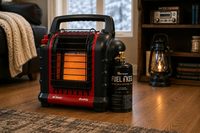 Indoor-rated propane heater An indoor-rated radiant heater (low-oxygen sensor, tip-over shutoff) for emergency warmth — only with ventilation and a working CO alarm. See current price
 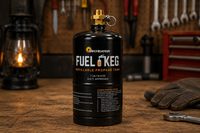 Refillable 1 lb propane canisters DOT-certified refillable 1 lb cylinders that feed the same heaters and stoves as disposable green bottles — for less money and less waste. See current price
 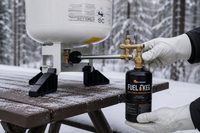 1 lb propane refill kit The adapter that refills 1 lb cylinders from a big tank in about a minute — outdoors, away from ignition sources. See current price
 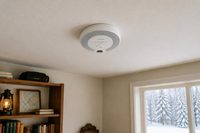 Interconnected smoke & CO alarm Battery-powered, wirelessly interconnected smoke + CO alarms so a problem in the heater's room wakes everyone — one in every bedroom and common room. See current price
 See all winter readiness picks →
A simple, safe setup
- One indoor-rated radiant heater for the room you’ll actually use.
- A few refillable 1 lb cylinders plus the refill kit, topped off from a 20 lb tank before the season starts.
- Interconnected smoke + CO alarms in every bedroom and common room, tested and dated.
- A cracked window for ventilation, the heater off while sleeping, and a flashlight and warm layers within reach.
Set up once, this is a quiet, reliable way to ride out a cold outage — and the safety gear is the part that makes the rest of it okay.